
SIRP Plugin
SIRP (Security Incident Response Platform) is the incident response hub of the platform, implemented based on Nocoly HAP, providing unified management of six entity types: Case, Alert, Artifact, Enrichment, Playbook, and Knowledge.
Deployment
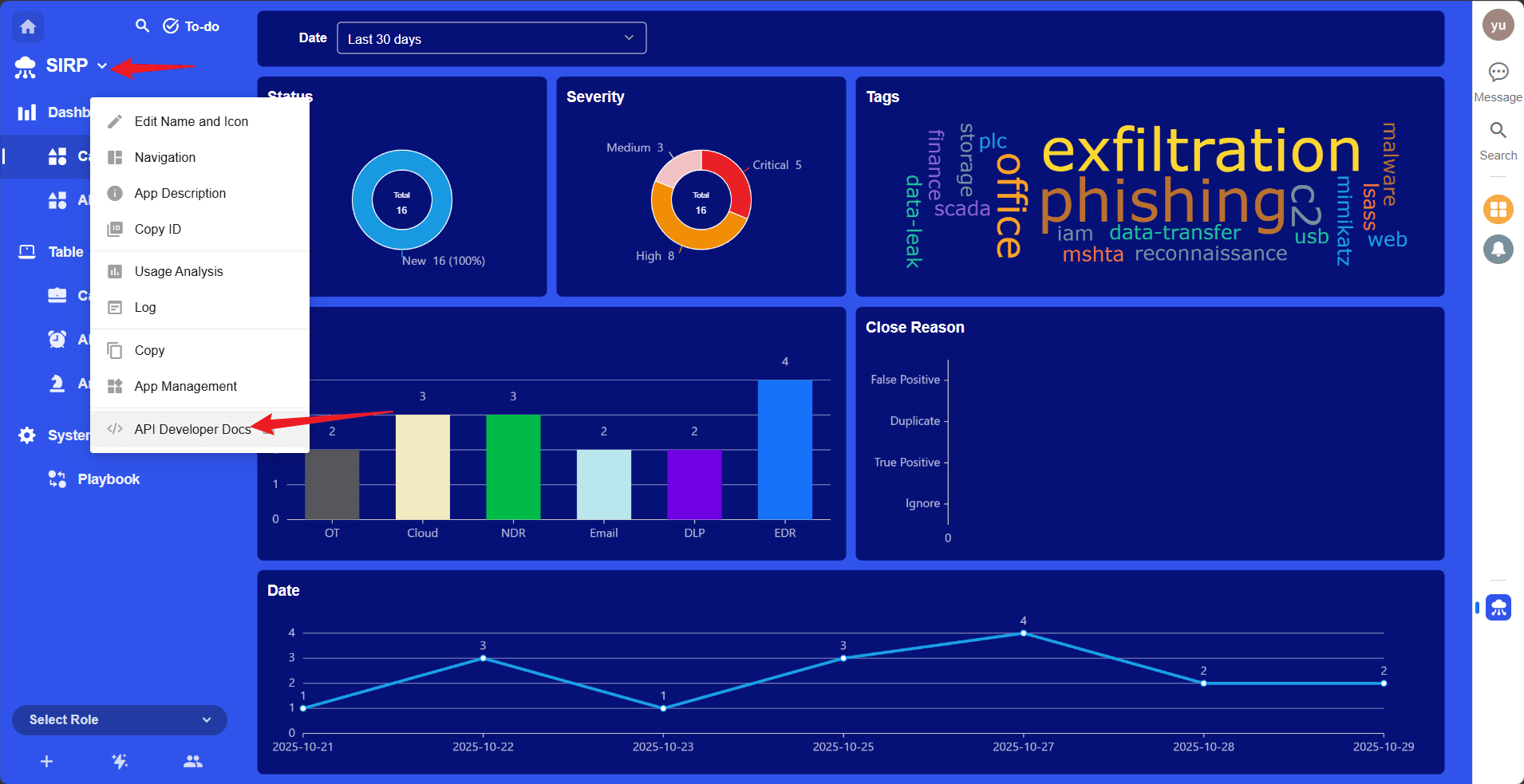
Configuration
- Rename
PLUGINS/SIRP/CONFIG.example.pytoCONFIG.py - Fill in the configuration items:
| Configuration Item | Description |
|---|---|
SIRP_URL | SIRP platform address, e.g. http://192.168.241.128:8880 (private deployment) or https://www.nocoly.com (cloud service) |
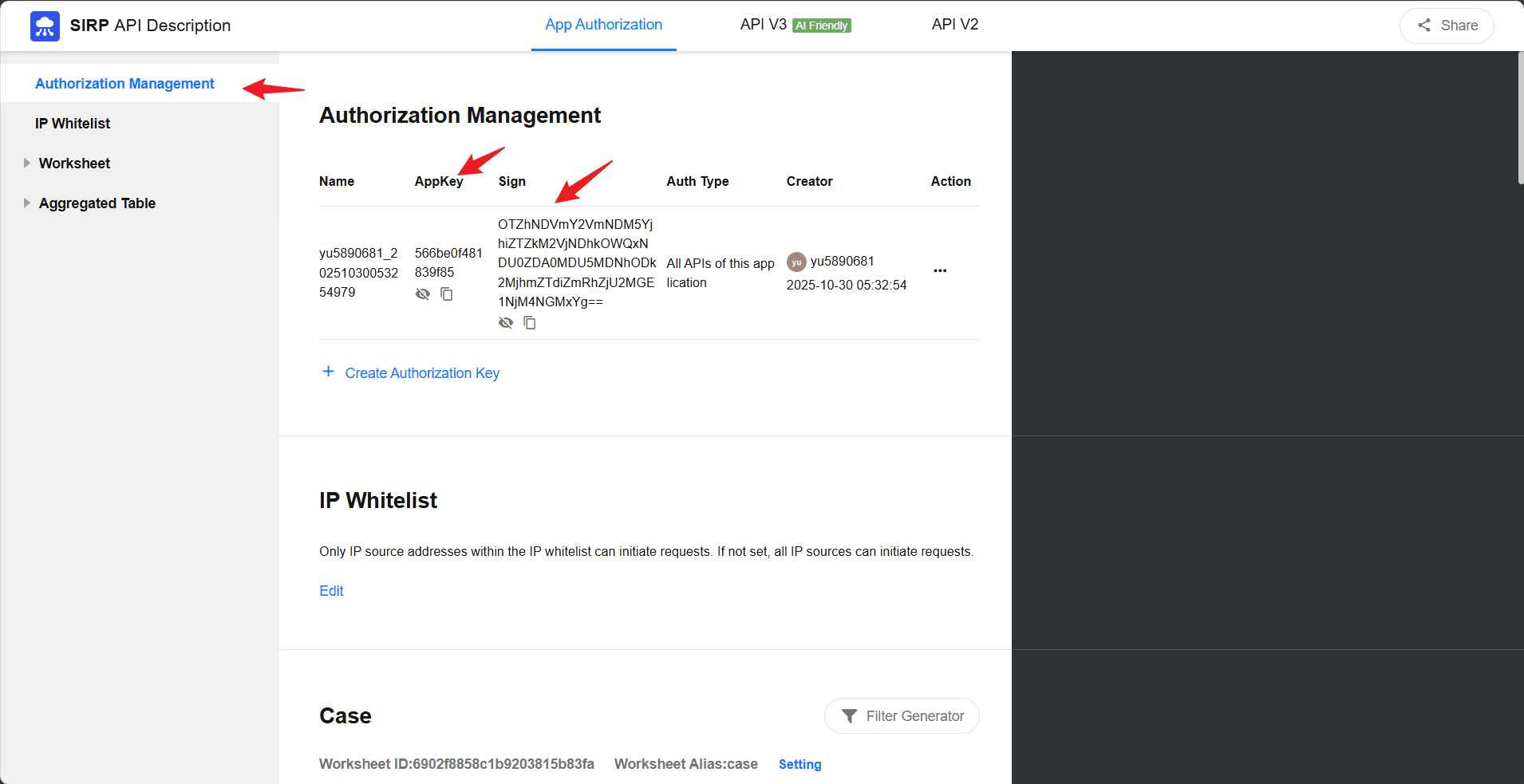
SIRP_APPKEY | Application key, obtained from the SIRP application management page |
SIRP_SIGN | Application signature, obtained from the SIRP application management page |
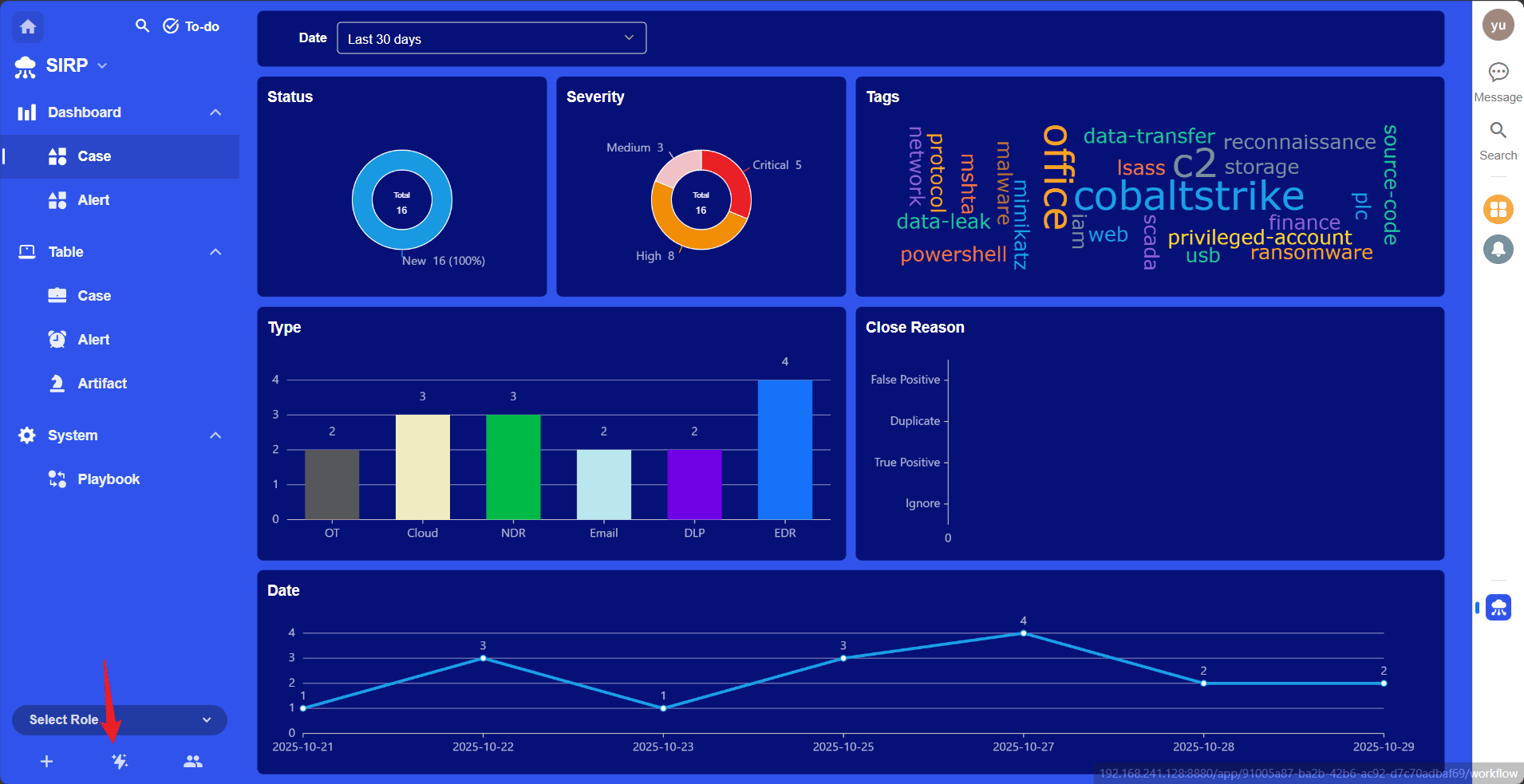
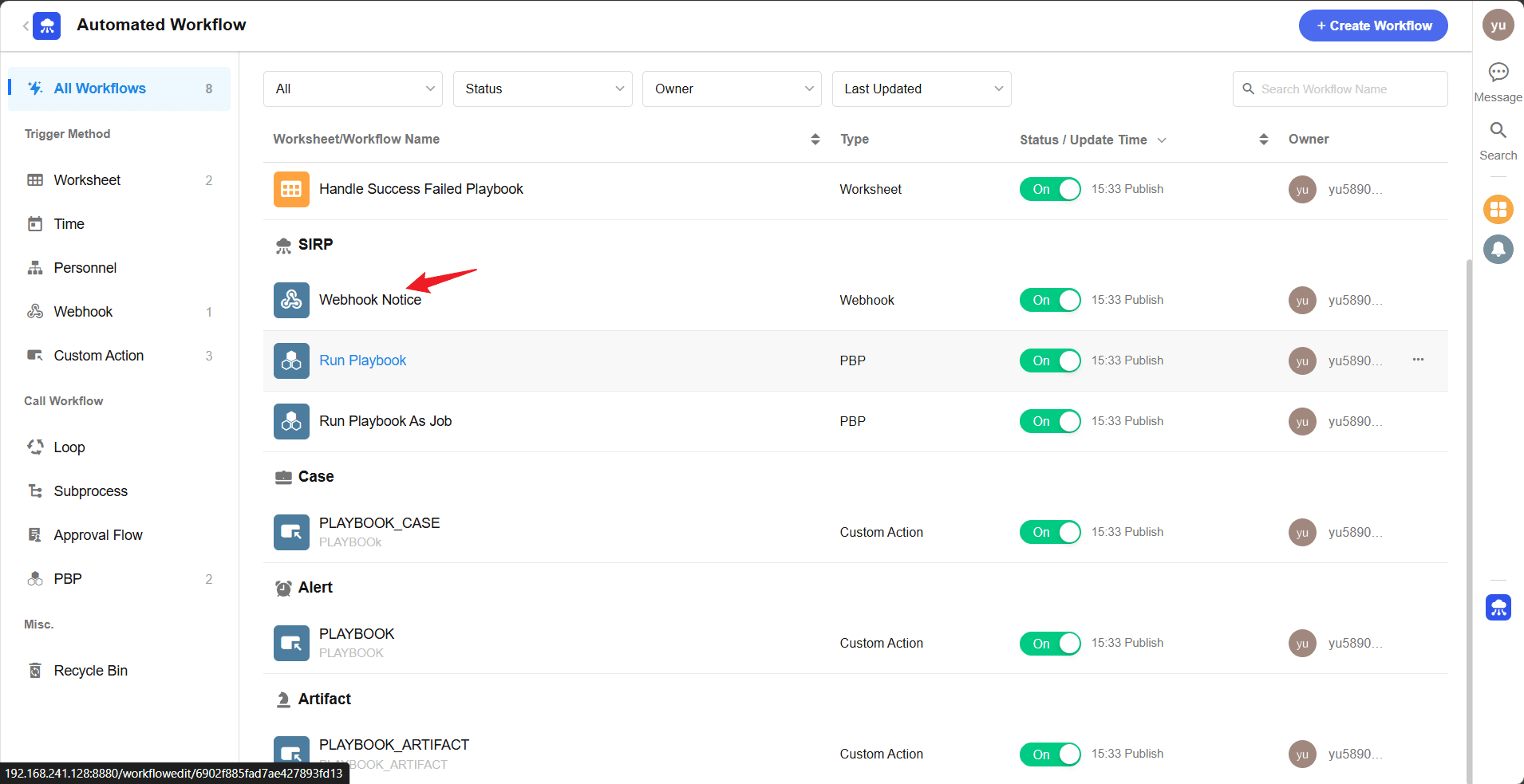
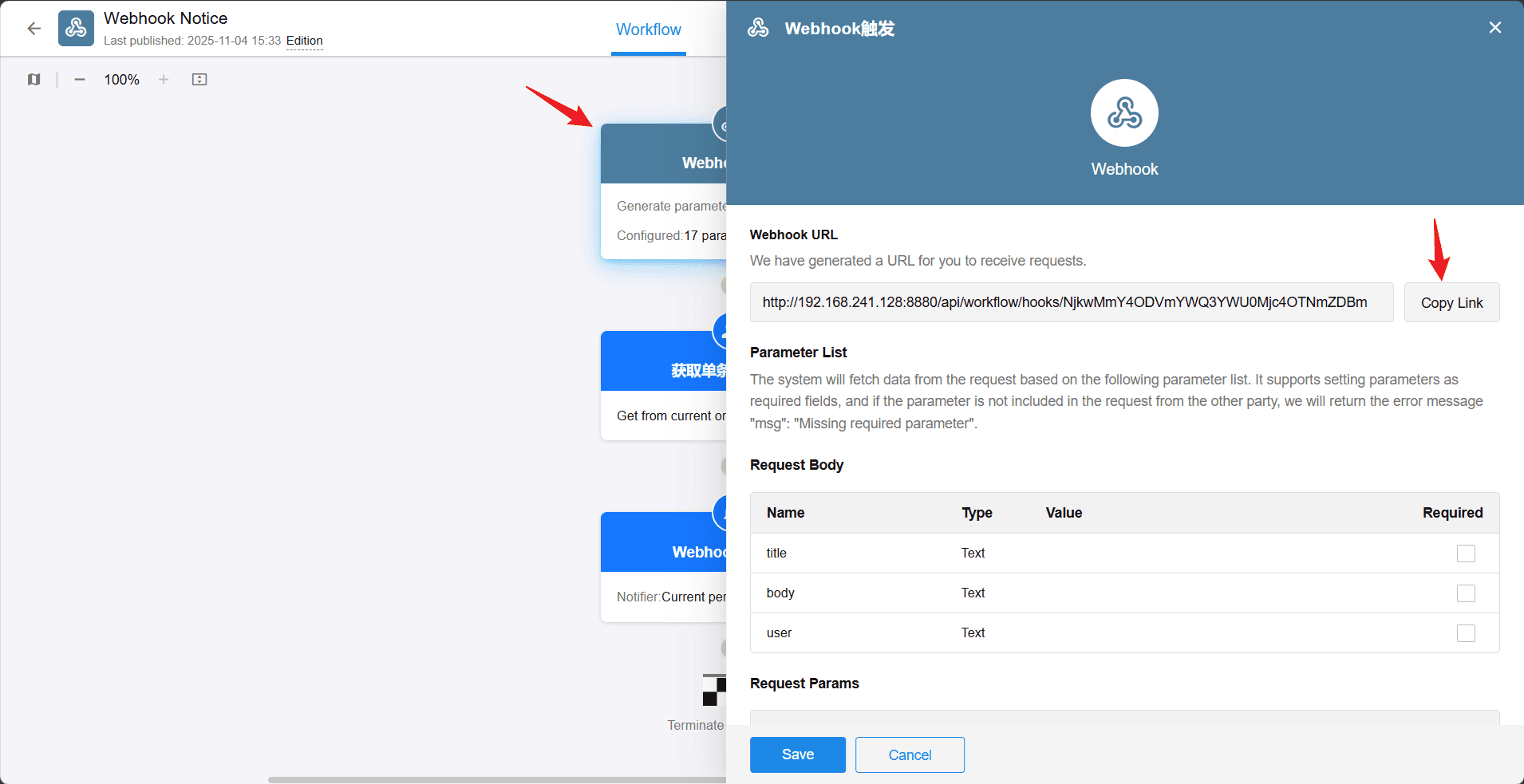
SIRP_NOTICE_WEBHOOK | Notification webhook address, used to push messages to users |
Core Entities
Entity Relationships
Case ──┬── Alert ──┬── Artifact ── Enrichment
       │           └── Enrichment
└── Enrichment- Case: A security case that aggregates multiple Alerts; the core object for analyst and AI analysis
- Alert: An alert mapped from SIEM Rule-generated alerts, including MITRE ATT&CK mapping, risk level, remediation suggestions, etc. An Alert can only be attached to one Case
- Artifact: An entity (IOC) extracted from alerts, such as IP, domain, hash, user, etc. An Artifact can be attached to multiple Alerts (many-to-many relationship)
- Enrichment: Enrichment data that can be attached at any level of Case / Alert / Artifact, supplementing context such as threat intelligence, CMDB, and geolocation
- Playbook: Response playbook execution records, linked to Cases, tracking execution status and results
- Knowledge: Knowledge base; internal security knowledge records for AI and analyst queries, supporting automatic extraction from closed Cases
Key Capabilities
General CRUD All entities support get / list / create / update / update_or_create / batch_update_or_create, with querying by row_id or business ID, and structured filter conditions.
Automatic Related Data Loading When a Case is loaded, associated Alert lists (including Artifacts and Enrichments) are automatically cascaded. When an Alert is loaded, Artifacts and Enrichments are automatically cascaded. No manual join is required.
Automatic Deduplication
- Artifact: Deduplicated by the composite key of name + type + role + value; if it already exists upon creation, the existing row_id is returned
- Enrichment: Deduplicated by uid (externally computed stable identifier) or type + provider + value; if it already exists, it is updated
- Artifact values are automatically normalized (email/hash/hostname converted to lowercase, MAC address format standardized)
Case AI Analysis Scheduling Cases support triggering automated AI analysis via mark_analysis_requested(), with cooldown scheduling based on Redis Stream (default 10 minutes), supporting debouncing and prioritizing first requests.
Separation of AI and Manual Assessment Cases maintain both manual assessment fields (severity / confidence / verdict) and AI assessment fields (severity_ai / confidence_ai / verdict_ai), which do not overwrite each other.
AI Investigation Report The Case's investigation_report_ai_json field stores LLM-generated structured investigation reports, including verdict, attack chain, timeline, IOCs, remediation suggestions, etc.
Discussion Records Cases and Alerts support discussion/comment threads, retrievable via get_discussions().
Playbook Execution Management Playbooks support creating pending execution records, tracking execution status (Pending / Running / Success / Failed), and triggering via Case ID.
Knowledge Search Knowledge supports searching non-expired knowledge records by keyword list (matching title or body), returning formatted results for AI consumption.
Notification Push Notice supports sending notification messages to specified users via Webhook.
AI Serialization All entities support the model_dump_for_ai(profile=...) method, filtering fields by profile (e.g. "mcp", "investigation") to generate concise JSON suitable for LLM consumption.